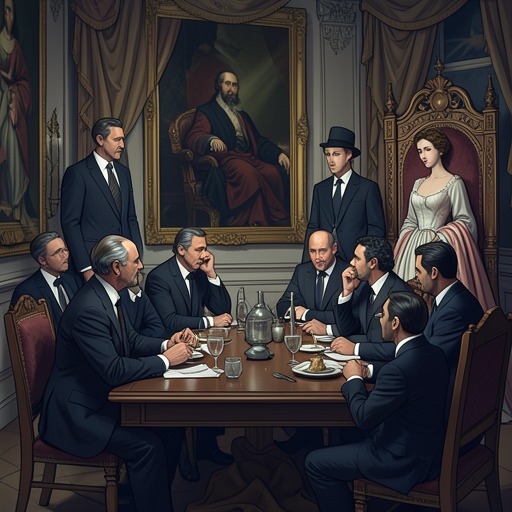
Henry Fitzroy
Wolf HallHenry Fitzroy is Henry VIII’s acknowledged illegitimate son and a young duke whose high rank places him near the center of England’s dynastic calculations. Although the evidence presents him chiefly through others’ discussion, his existence illustrates how royal paternity, titles, and the prospect of heirs shape court politics.
Identity and Status
The novel identifies Henry Fitzroy as the king’s illegitimate son, born to one of the king’s former mistresses, John Blount’s daughter. Henry VIII acknowledges him, and he is described as a handsome blond child made in his father’s image. By the time he is not yet ten, the king has made him Duke of Somerset and Duke of Richmond; he is already the senior nobleman in England.
The Royal Household and Succession
Fitzroy’s position is discussed in connection with the king’s relationship with Mary Boleyn. Thomas Wolsey considers whether the king’s involvement with Mary might produce a child and notes that, because she is married, the king could choose whether to acknowledge such a child. The conversation turns to the complications of a large royal nursery: mothers might contend for status and try to place their children in the succession. Fitzroy is the existing example of a son whom Henry has publicly recognized, but the passage does not say that he is included in the succession.
The account sets Fitzroy’s acknowledged status beside the vulnerability of Henry VIII and Katherine of Aragon’s legitimate sons, all of whom have died. Katherine endures this loss, while Fitzroy’s elevation demonstrates that royal recognition can give an illegitimate child exceptional rank without resolving the question of dynastic inheritance.
Political Significance
Fitzroy’s titles make his status more than a private family matter: as Duke of Somerset and Duke of Richmond, he outranks the English nobility while still a child. The novel uses this contrast to show the reach and limits of royal favor. Henry can bestow titles and acknowledge a son, but the prospect of too many royal children also raises concerns about competing claims and the order of succession. Fitzroy’s brief appearances in political discussion therefore register the larger instability surrounding Henry VIII’s household and the future of the crown.